


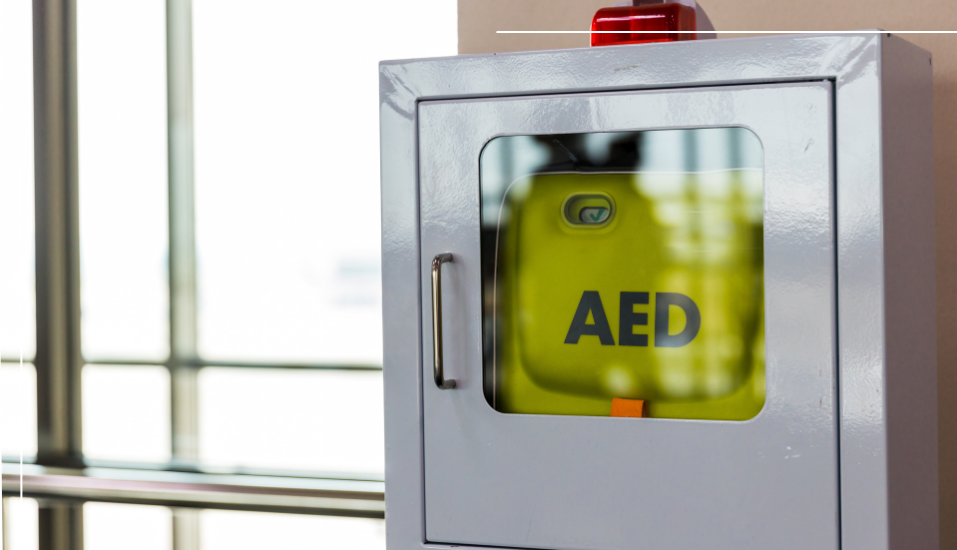
An AED is a piece of emergency medical equipment, and like any life-saving device, it requires regular AED maintenance. Expired AED batteries, expired AED pads, damaged components, or missed inspections can leave an AED unable to perform when someone’s life depends on it.
Many workplaces, community organizations, churches, schools, and recreational facilities have invested in an Automated External Defibrillator (AED). That’s a great first step.
But simply having an AED mounted on the wall isn’t enough.
The reality is simple: an AED that isn’t ready when it’s needed cannot save a life.
That’s why owning an AED is only part of the solution. Maintaining it is just as important.
Every year, approximately 60,000 Canadians experience an out-of-hospital cardiac arrest. Unfortunately, about 9 out of 10 do not survive.
When cardiac arrest occurs, time is critical. For every minute that passes without CPR and defibrillation, a person’s chance of survival decreases by roughly 10 percent.
The good news is that early intervention works.
Heart & Stroke Canada reports that performing CPR and using an AED can double a person’s chance of survival.
Research has shown that survival rates can increase dramatically when an AED is applied quickly. In one large study, survival was 9% when only bystander CPR was provided, compared to 24% when an AED was applied and 38% when an AED delivered a shock.
AEDs save lives. But only if they are functional when needed.
Many organizations purchase an AED, install it, and assume it will remain ready indefinitely.
Unfortunately, AEDs contain components that expire.
Electrode pads contain conductive gel that allows the AED to analyze the heart rhythm and deliver a shock if needed. Over time, that gel dries out and becomes less effective.
Most AED pads have expiration dates and must be replaced according to the manufacturer’s recommendations. Using expired pads can increase the risk of poor adhesion, inaccurate rhythm analysis, or failure to deliver a shock.
AED batteries also have a limited lifespan, typically between two and five years depending on the model and usage. Many batteries include an expiration or “install by” date that should be monitored carefully.
While many modern AEDs perform self-tests, those self-tests cannot replace routine inspections.
Health Canada recommends routine maintenance that includes:
The Canadian Centre for Occupational Health and Safety also recommends regularly checking the AED’s working status, pads, accessories, and battery condition.
A simple monthly inspection can identify issues before they become emergencies.
AED pads and batteries have different replacement schedules depending on the manufacturer and model. Most AED pads and batteries expire every 2–5 years. Organizations should always follow manufacturer recommendations and regularly check expiration dates as part of their AED maintenance program.
We’ve seen organizations proudly display an AED on the wall, only to discover during an inspection that the pads expired years ago or the battery was nearing the end of its service life. Fortunately, these issues are easy to prevent with regular checks and a simple maintenance schedule.
Improperly maintained AEDs are one of the preventable barriers to improving cardiac arrest survival rates in Canada.
Owning an AED is important.
Maintaining it is essential.
At minimum, organizations should:
✓ Check the AED status indicator monthly
✓ Verify pad expiration dates
✓ Verify battery expiration dates
✓ Ensure the rescue kit is complete
✓ Confirm the AED is visible and accessible
✓ Record inspections and maintenance activities in a logbook
✓ Replace pads after every use
✓ Follow all manufacturer maintenance requirements
Keeping a maintenance log can help ensure nothing gets missed.
Because when a cardiac arrest happens, nobody wants to discover that their AED wasn’t ready.
If your organization has an AED, now is a great time to check the expiration dates on your pads and batteries. A two-minute inspection today could make all the difference tomorrow.
Complete Safety Training provides AED sales, AED inspections, replacement AED pads and batteries, and ongoing AED maintenance services for workplaces, schools, churches, healthcare organizations, and community facilities throughout Atlantic Canada.
To learn more about purchasing an AED or setting up an AED maintenance program, contact our team today.
Download: Monthly AED Inspection Checklist PDF


